
The Coast is Not Just Beaches
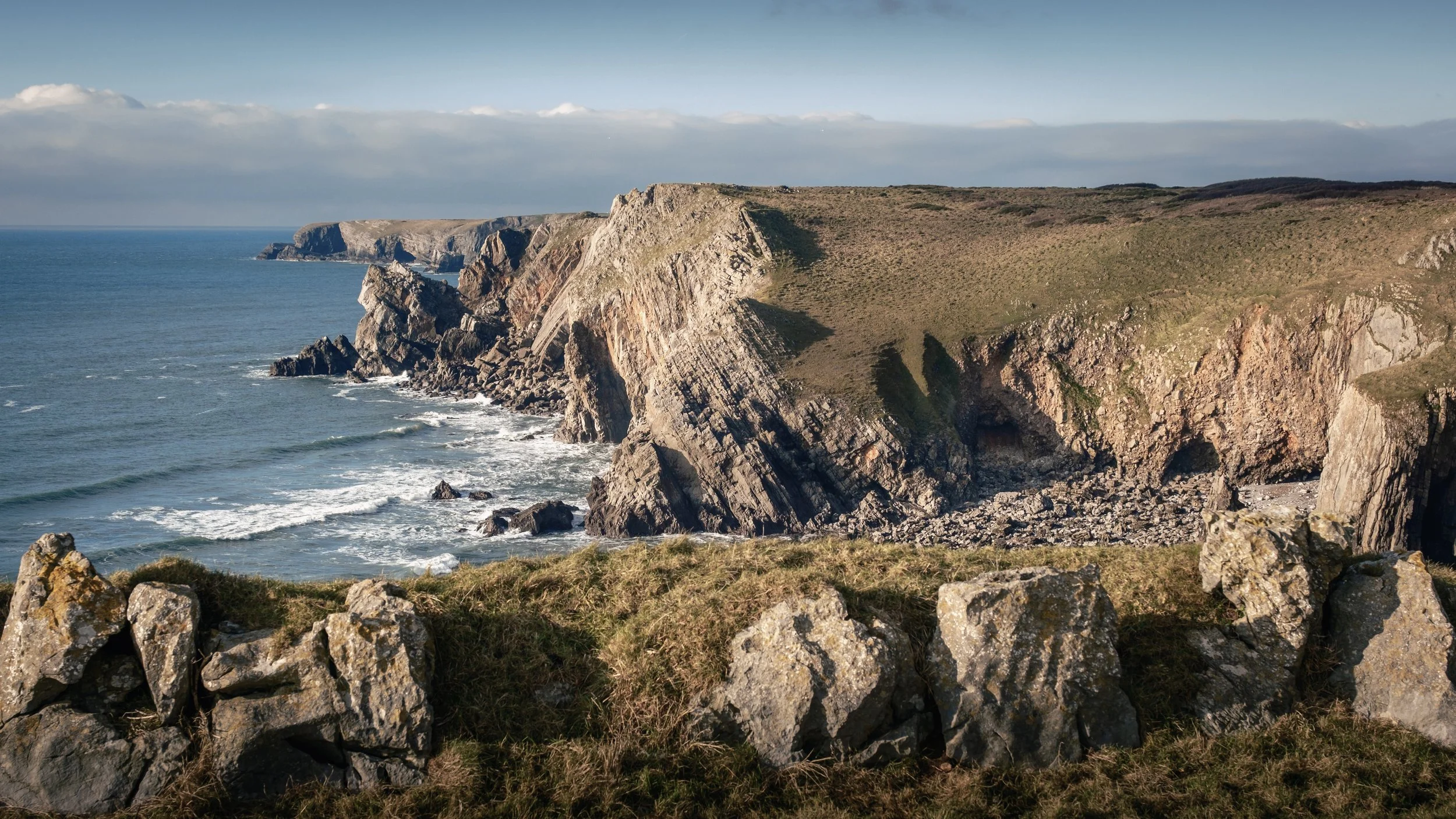
Towards Saddle Head, Pembrokeshire
Most people, when they think of the Pembrokeshire coast, picture sand. And there is sand here, undeniably, some of the finest in Britain. But beaches are only part of what makes this coastline memorable.
The coast path between Waterwynch and Saundersfoot is a good place to start. It is a short walk but an immediately rewarding one, with views across the bay that open up quickly and stay with you. From there the scale of what surrounds you becomes clear: headlands reaching into the sea, the water changing colour with the light, a coastline that feels older and less managed than most.
Go further west and the character shifts entirely. Around Lydstep and Manorbier the cliffs become more dramatic, the rock more fractured and exposed. These are walking headlands rather than swimming beaches, places where the path climbs and the sea drops sharply away below, where you can stand on a natural arch and look straight down through rock to the water, or follow a narrow trail to a viewpoint that has no particular name but stops you in your tracks regardless.
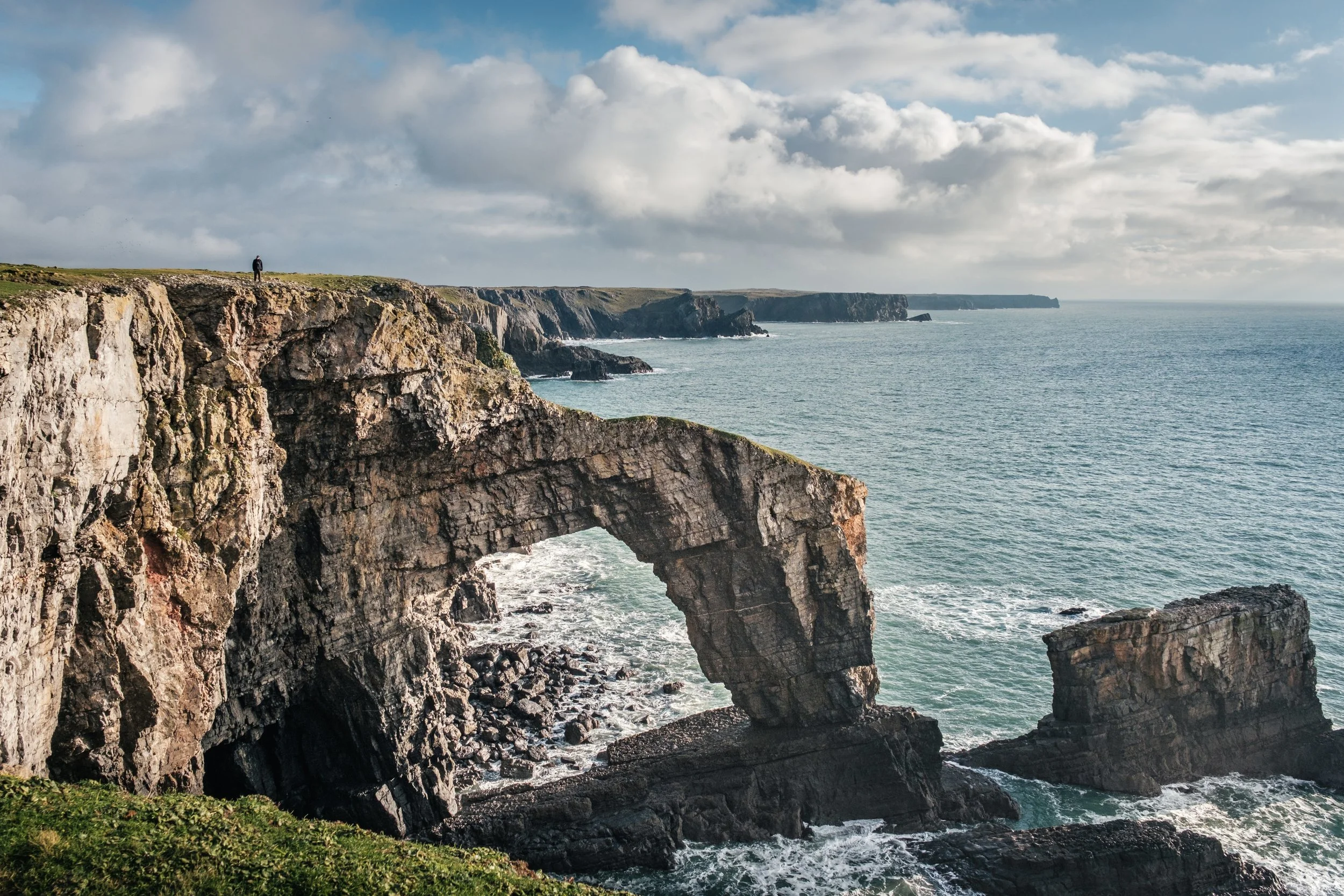
The Green Bridge of Wales, Pembrokeshire
Further west still, the landscape becomes something else again. St Govan’s Head, Stackpole Quay, the Green Bridge of Wales, Stack Rocks: this is Pembrokeshire at its most elemental. The Green Bridge is one of the great natural arches in Britain, a limestone span over open sea that feels improbable from every angle. Stack Rocks rise vertically from the water nearby, their ledges crowded with guillemots and razorbills in season, and seals visible on the rocks below. St Govan’s Chapel sits tucked into a cleft in the cliff face, reachable only by a long flight of stone steps, ancient and small and completely unexpected. Stackpole Quay offers a gentler version of the same mood, a sheltered stone harbour and wooded valleys running down to the sea.
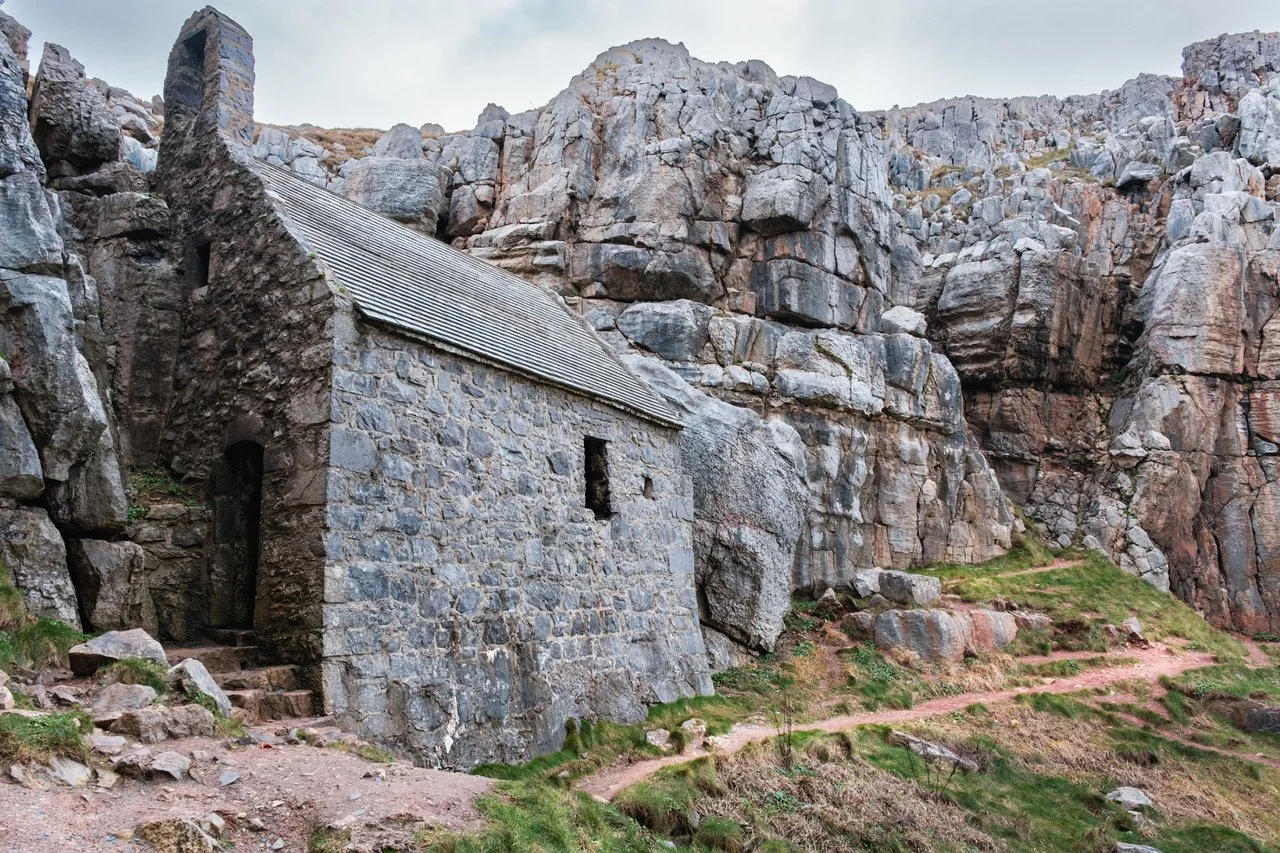
St Govan’s Chapel, St Govan’s Head
Just inland, the Bosherston lily ponds stretch through a series of flooded limestone valleys, covered in water lilies in early summer and home to otters, kingfishers and dragonflies. It is one of those places that feels entirely removed from the coast, until you walk few minutes south and find yourself on the clifftops above St Govan's Head.
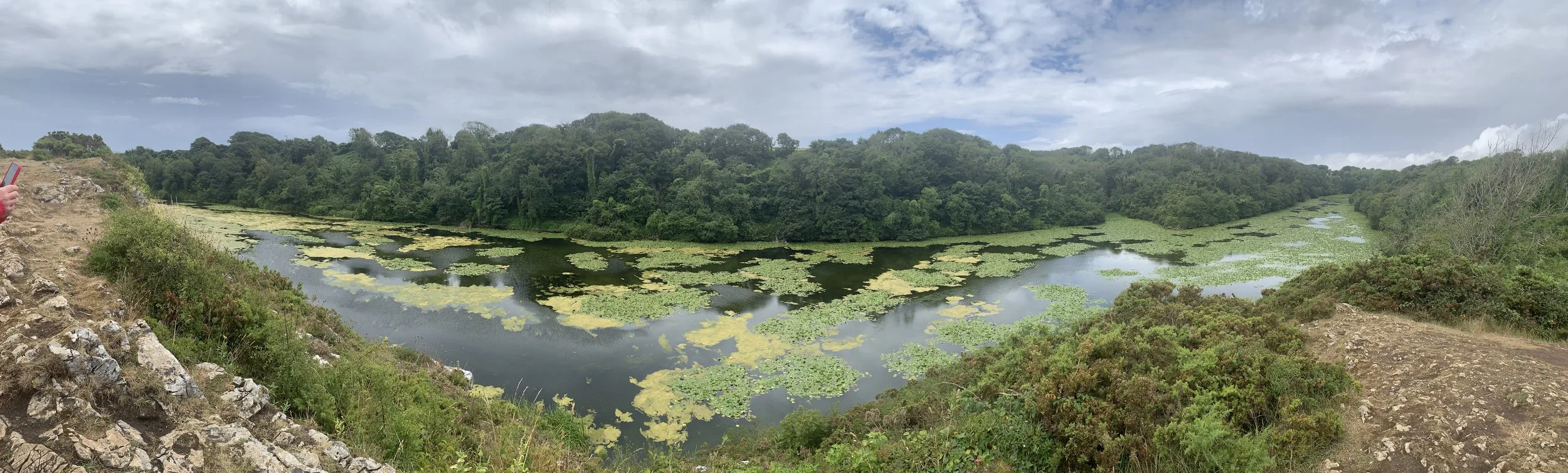
Bosherston Lily Ponds, Pembrokshire
The old Dramway between Saundersfoot and Wiseman’s Bridge offers a different kind of walk altogether. Built to carry anthracite coal from the collieries at Stepaside down to the harbour, and later used as a training ground for the D-Day landings, the route passes through a series of tunnels cut directly into the rock, dark and cool even in summer, emerging each time to a changed view of the sea. It is the kind of walk that children remember for years, not because it is dramatic, but because it is atmospheric in a way that is difficult to explain until you have done it.
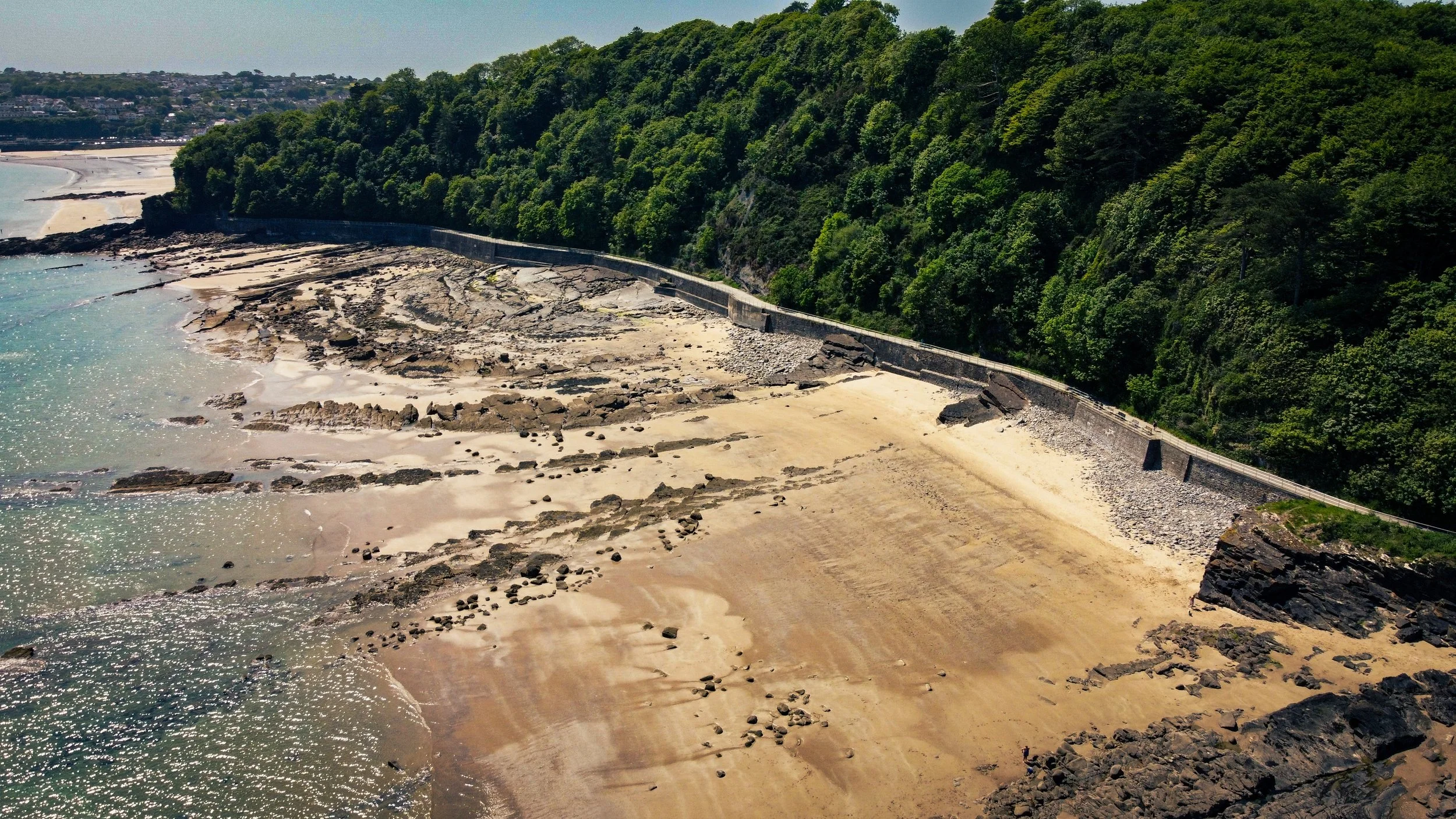
The Old Dramway Between Saundersfoot and Wiseman’s Bridge
Waterwynch sits at the eastern end of all this. The coast path runs close to the house. The sea is visible from much of it. But the invitation here is not simply to admire the view from a distance. It is to go out into it, to walk the headlands and find the places that photographs do not quite prepare you for, and to come back in the evening with that particular tiredness that only comes from having been properly outside.
The beaches are here when you want them. But so is everything else.