
Exploring Waterwynch at Low Tide
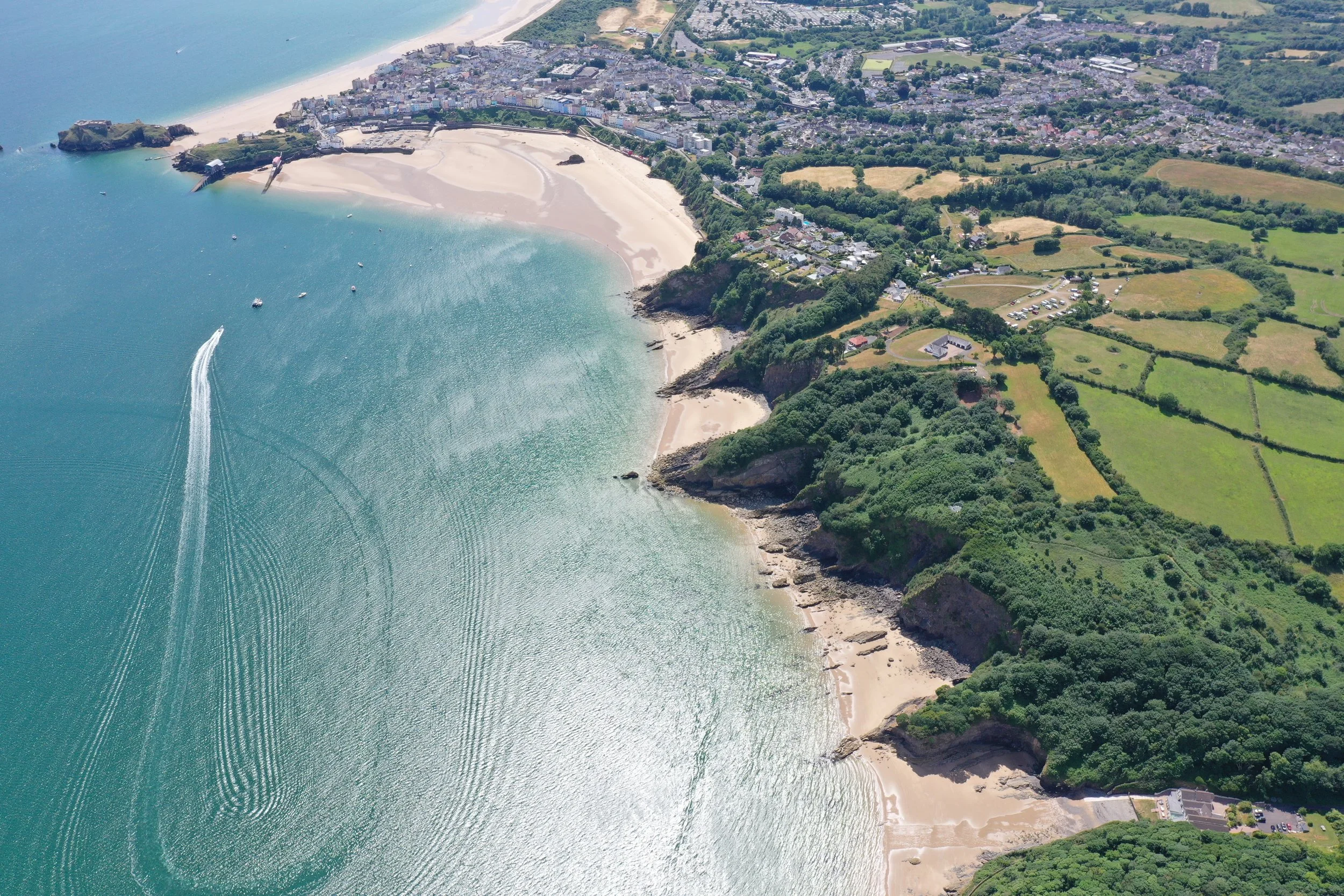
Waterwynch to Tenby Beach Walk
Step outside at the right moment, and the landscape quietly rearranges itself.
At high water, the bay feels enclosed and self-contained, the shoreline curving gently beneath the house. But as the tide recedes, it reveals something quite different: a wide stretch of sand, rock and coastline that opens up in both directions. What was once a quiet cove becomes a place to explore, whether that’s a short wander or a longer walk along the shore.
Walking to Tenby along the beach
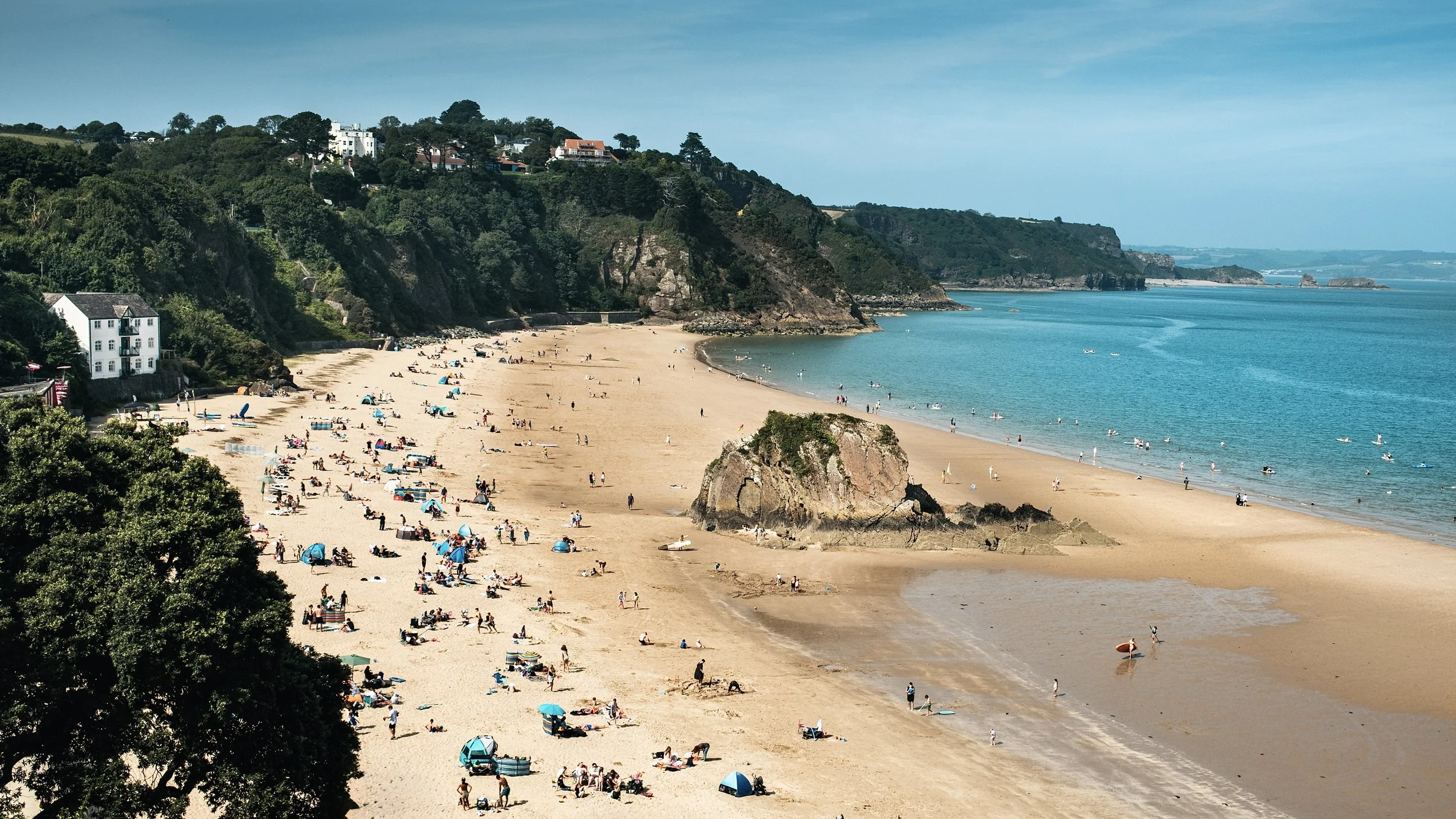
At very low tide, it’s possible to walk from Waterwynch all the way into Tenby along the beach.
Heading out of the bay to the right, the coastline gradually unfolds. Cliffs give way to broader stretches of sand, and the view ahead slowly opens until Tenby comes into sight. There’s something particularly satisfying about approaching it this way: on foot, with the town appearing gradually rather than all at once.
The walk itself is straightforward at the right state of the tide, taking around 15 to 20 minutes depending on pace. The key is timing: the tide needs to be below approximately 1.1 metres to avoid sections where the route becomes more awkward, with rocks and uneven ground underfoot. At the lowest tides, the path is at its simplest, with a more or less clear, uninterrupted stretch of beach.
You arrive onto Tenby’s North Beach, one of the most striking in the area. From there, it’s an easy walk into the harbour and town, whether for coffee, lunch, or simply a wander before returning.
The other direction: Brownslade Beach
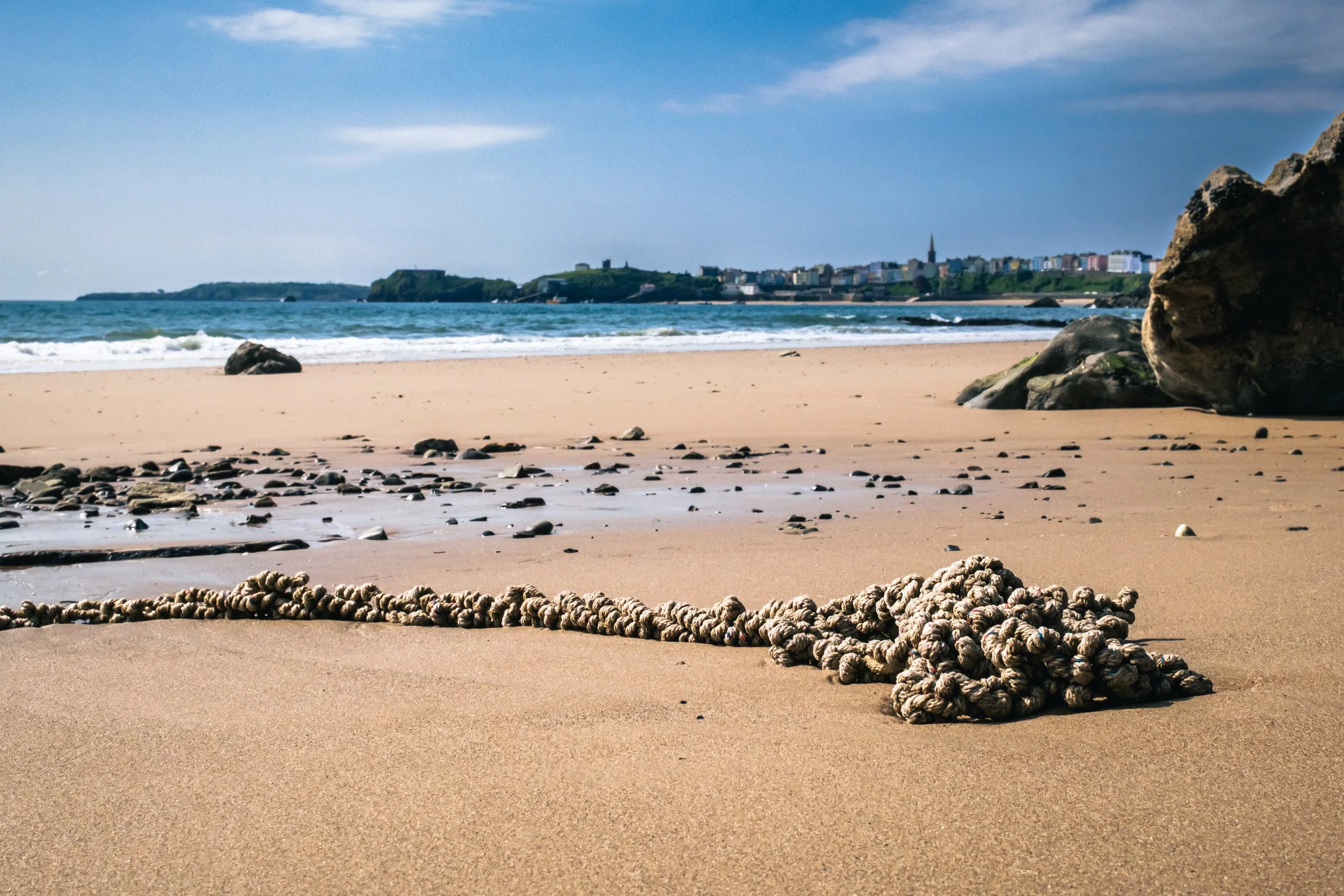
Turning left out of the bay leads to something quieter.
Brownslade Beach stretches out in the opposite direction and tends to feel more remote, even at the height of summer. It’s broader, less defined, and often entirely empty beyond the occasional walker. The cliffs rise more steeply here, and the sense of being slightly removed from everything is part of the appeal.
There’s a long association with smuggling along this stretch of coastline, and it’s not hard to see why. Small inlets, hidden corners, caves and the shifting edge of the tide give it a slightly more rugged, less predictable character.
It’s also a place where you tend to notice the wildlife more such as seabirds along the shoreline, and occasionally peregrine falcons along the cliffs.
Caves, rock formations and the detail of the shoreline
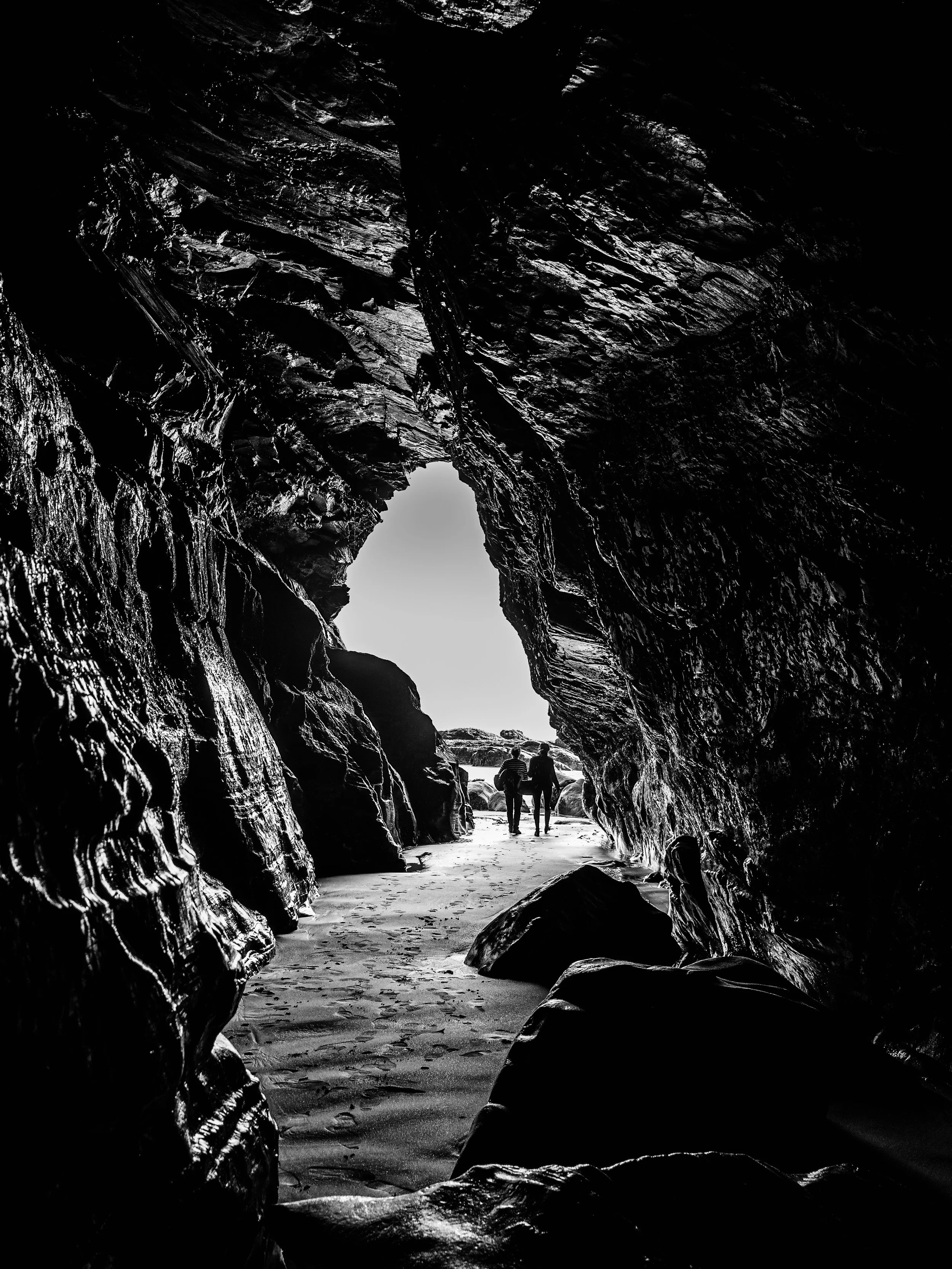
Between the two directions, the area immediately around Waterwynch offers plenty to explore at low tide.
As the water pulls back, it reveals rock pools, textured ledges and small caves that are otherwise hidden. Some are little more than openings in the rock; others extend further back, catching the light differently as the day moves on. For children, it becomes a place to explore and discover; for adults, something quieter, an opportunity simply to slow down and take in the detail.
It’s not a single dramatic feature that defines it, but the accumulation of small things: the changing patterns in the sand, the shape of the rock, the way the light reflects across wet and dry surfaces.
A few practical notes
The main thing is timing. For the walk to Tenby, aim for a tide below 1.1 metres and allow enough time for the return. Tide tables are easy to check in advance, and sturdy footwear helps on the rockier sections.
If the tide comes in, the return simply takes a different form, with routes back inland, including the coastal path, offering a change of perspective rather than a compromise.
From the house, not a day trip
What makes all of this feel slightly different is how easily it begins.
There’s no need to drive, park or plan extensively. At the right point in the day, you can simply step out from the house and follow the shoreline: towards Tenby, towards Brownslade, or just along the edge of the bay.
It’s a small thing, but often the kind that defines a stay: the ability to move between house and landscape without interruption, and to find something new each time the tide shifts.
Explore Waterwynch House.
View availability for upcoming stays at Waterwynch House.