
Built by an Artist, Shaped by the Sea: The Story of Waterwynch House
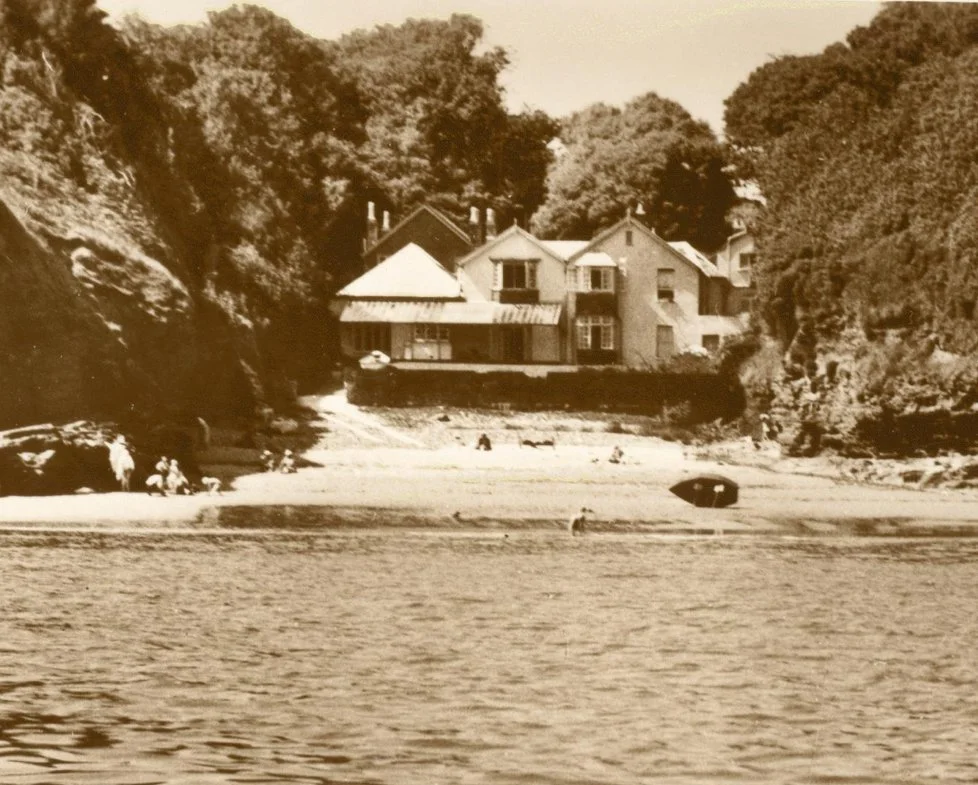
There is a particular quality that certain places have, a sense that they have been shaped not just by time but by the specific people who chose them. Waterwynch House is one of those places.
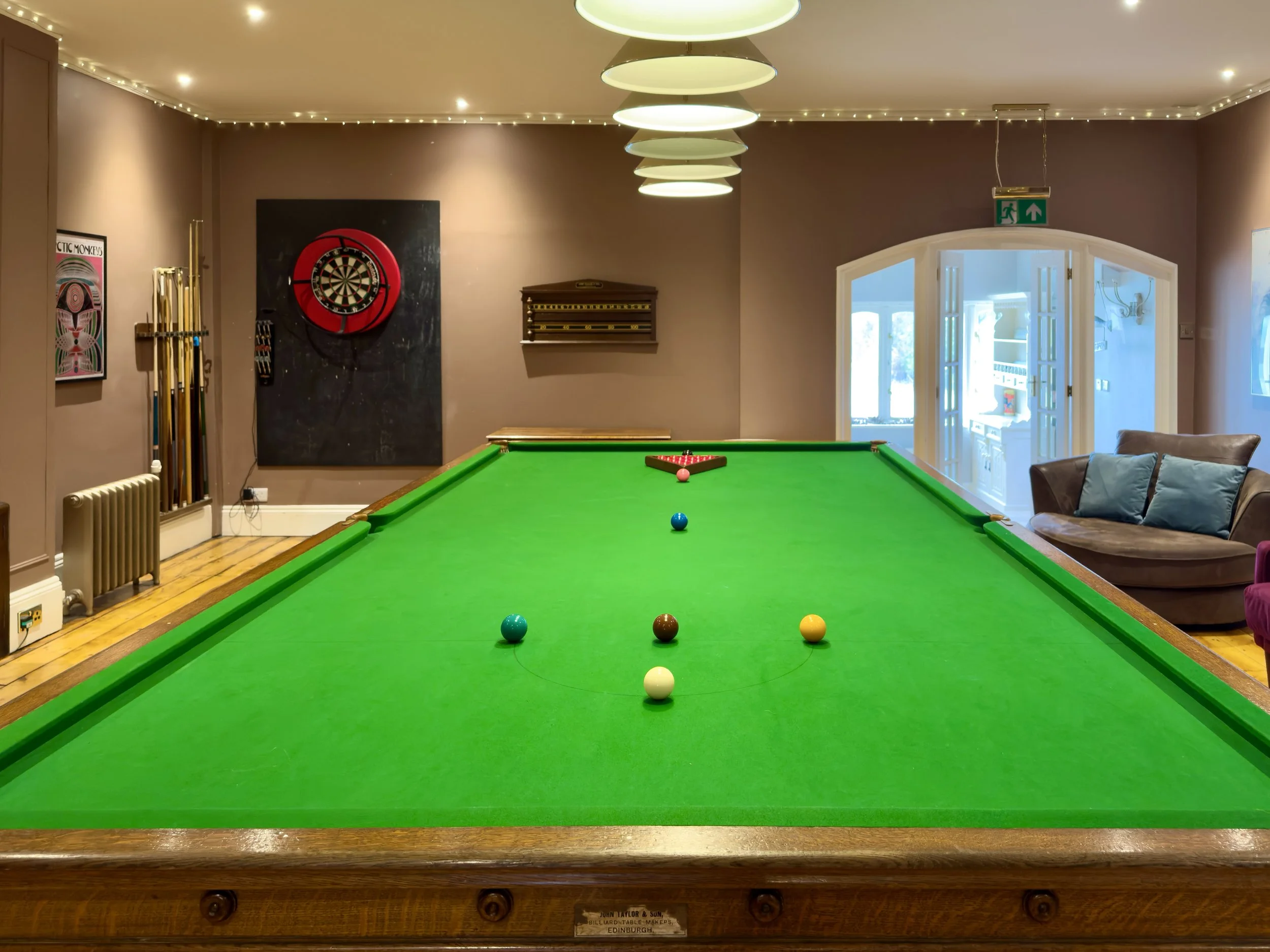
Set in its own bay just outside Tenby, the house has stood for over two centuries. It has been home to an artist, a politician, a scientist and a family connected to the highest levels of British public life. The snooker table in the games room was installed in the 1920s and is still there.
Understanding that history does not require you to be a guest here. But it changes something about what it feels like to be one.
The artist who left London for the Welsh coast
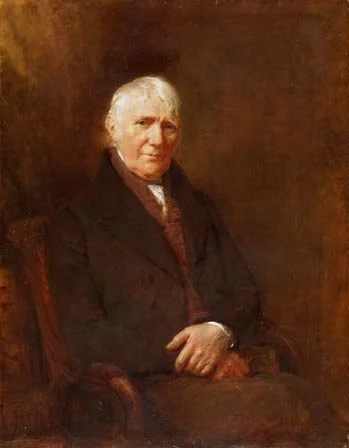
Charles Norris
Charles Norris was born in London in 1779, the son of a wealthy merchant. By 1800, still in his early twenties, he had left the city for Wales, settling first in Milford Haven before making his way along the Pembrokeshire coast to Tenby by around 1810.
What drew him there becomes clear when you understand his background. Norris's early years were spent in Norwich, where he developed a deep appreciation for Flemish architecture. Tenby, at the turn of the 19th century, still had much of its Flemish architecture intact. For someone who had spent years studying that particular tradition, finding it alive and largely undocumented on the Welsh coast must have felt like an extraordinary discovery. Tenby was also a town of medieval walls, a working harbour and a coastline that had seen relatively little artistic documentation. For a topographical etcher and writer with an eye for landscape and architecture, it was an extraordinary subject.
Norris spent years documenting what he found. His etchings and watercolours of Tenby and its surroundings became one of the most important visual records of the town before photography. The medieval buildings he drew, the harbour, the streets, the coastline: many of them changed beyond recognition, or gone entirely, in the centuries since. They survive in his work. His publications included A Historical Account of Tenby in 1818 and Etchings of Tenby in 1812.
Norris was an artist of independent means who worked outside the mainstream art establishment, exhibiting neither at the Royal Academy nor the British Institution. He produced his work purely out of personal interest rather than commission, which gives it a particular quality of attention. He was recording what he loved, not what he was paid to record. His work is held not only at Tenby Museum and Art Gallery but also at the National Library of Wales in Aberystwyth, where a digital exhibition of the Etchings of Tenby can be viewed online.
In recognition of his contribution to documenting and promoting the town, the Burgesses of Tenby granted Norris a lease on a plot of land between Saundersfoot and Tenby in the late 1810s, on the condition that he build a house costing no less than £200 within two years. The site he chose was exceptional: a south-facing position nestled between the wooded cliffs of a secluded bay, looking out across the sands towards Carmarthen Bay.
Waterwynch House was completed in 1820.
Norris lived and worked here until his death in October 1858, nearly forty years. He had come to Pembrokeshire as a young man from London and found in this particular bay something that held him for the rest of his life.
Norris was not Welsh by birth. He was a Londoner who came to Wales in his early twenties and stayed. In that sense, he belongs to a longer tradition of artists, writers and travellers who found in Pembrokeshire something they had not expected: drama, light, coastline, quietness and a sense of place strong enough to alter the course of a life.
A house offered for sale, 1877
In July 1877, nearly twenty years after Norris's death, Waterwynch was offered for sale by public auction at the Royal Lion Hotel in Tenby. The sale advertisement, which survives, describes the house in terms that would be recognisable to any guest today: panoramic views across Carmarthen Bay to Tenby, Gower, Caldey and as far as the Devonshire coast; the bay directly below the house described as affording excellent shelter and abounding with salmon, lobsters, crabs and shrimps; and grounds extending to thirty-eight acres with ornamental walks, ponds, fernery, orchard and cascading waterfalls. The advertisement also notes that the geological formations near the house had been fully described by Murchison and De la Bech, two of the most distinguished Victorian geologists of the age. It was, the advertisement concluded, admirably suited to people who had lived in India and invalids, sheltered as it was from the east winds.
The house had always been occupied as a private residence. It would remain so until the 1960s.
The politician and the scientist
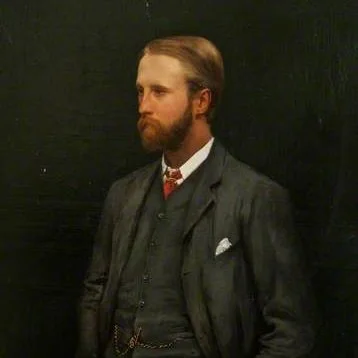
Sir Edward Aurelian Ridsdale
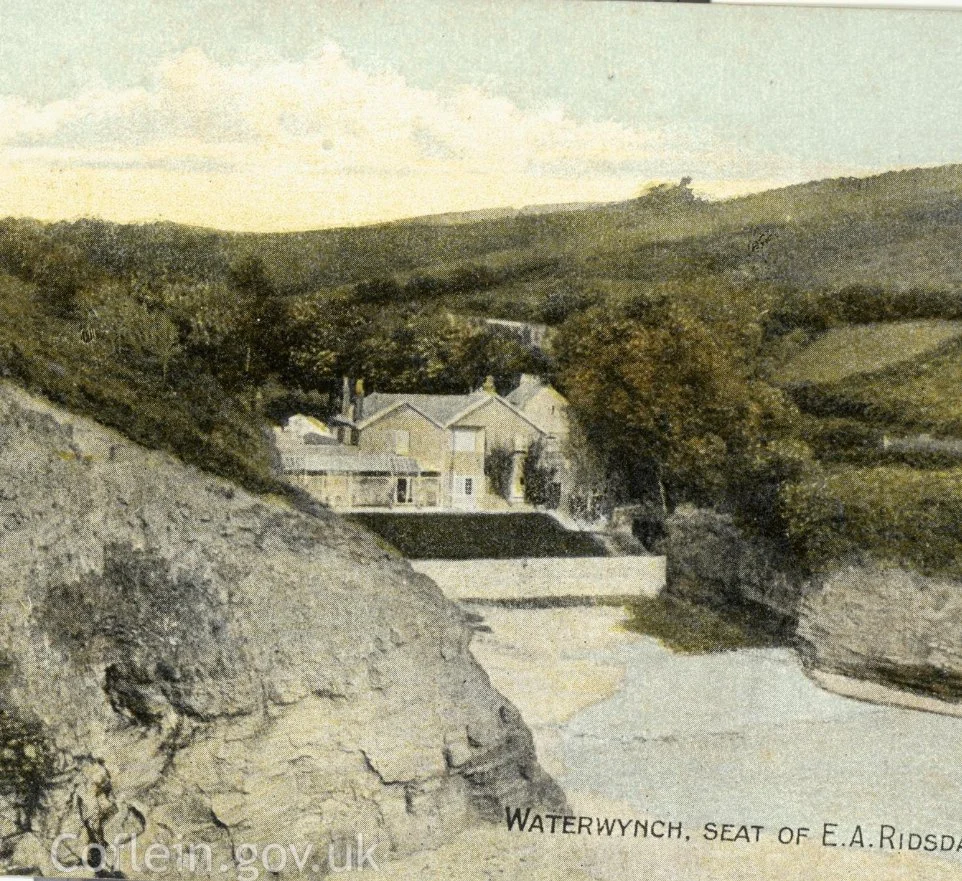
Waterwynch when owned by Sir E A Ridsdale
In 1902, Waterwynch was purchased by Sir Edward Aurelian Ridsdale, who made it the family home. Ridsdale was a man of considerable public distinction. Educated at the Royal School of Mines, where he developed a serious interest in geology, he was later elected as Member of Parliament for Brighton and served as Chairman of the Executive Committee of the British Red Cross, for which he was awarded the GBE in 1919. He died at Waterwynch in 1923.
His choice of this particular house, on this particular stretch of coast, feels fitting for a man with a serious interest in geology. The bay at Waterwynch has its own dramatic coastal geology: layered cliffs, tidal formations, the kind of shoreline that rewards a careful eye in the same way it once rewarded an artist's. The 1877 sale advertisement had already noted that the geological formations near the house had attracted the attention of some of the greatest geologists of the Victorian age. Ridsdale, arriving a quarter of a century later, was drawn to the same place for reasons that may not have been entirely different.
Ridsdale's scientific interests left a lasting legacy in Tenby. In 1928, his wife Lady Susan Sterling Findlay Ridsdale presented Tenby Museum and Art Gallery with his remarkable mineral and rock collection, comprising over 300 specimens gathered from geologically significant locations across the world, including Norway, Iceland, the Shetland and Faroe Islands, and numerous sites across Britain. Many of the specimens are believed to retain their original labels, recording sample type and location in Ridsdale's own hand. The collection remains at Tenby Museum today.
The Ridsdale family's connections to national public life extended further still. His daughter Lucy married Stanley Baldwin, who served as Prime Minister on three separate occasions between 1923 and 1937. Baldwin, who was of Welsh descent on his mother's side, spent holidays at Waterwynch, making it one of the private houses in Wales with a direct connection to a serving British Prime Minister.
Ironically, Baldwin's great Liberal rival David Lloyd George was also a regular visitor to Tenby during the same period. The two men who dominated British politics between the wars both found their way to this particular stretch of the Pembrokeshire coast.
The house today
In the 1960s the house was converted into a hotel, a period that saw the Great Hall divided into four bedrooms and the original mouldings removed throughout. In 1999 the property was purchased by Philip Evans, then chairman of the Welsh Tourist Board, who closed it as a hotel and set about restoring it to its original character. He demolished the 1960s extensions, reinstated the Great Hall, and painstakingly restored 360 feet of original mouldings from a surviving fragment. He also used the house to entertain overseas tourism guests, continuing in its own way the tradition of Waterwynch as a place that has helped bring visitors to Wales.
During the decade before the current ownership, the house was also visited through a family connection by Ken Follett, the Welsh-born international bestselling novelist whose works include The Pillars of the Earth and the Century Trilogy. It is a small detail, but a fitting one for a house whose story has so often involved artists, writers, public figures and Wales itself.
That connection between Waterwynch and Welsh cultural life has continued into the present. In 2024 the house was chosen as the setting for Ni Yw'r Cymry, an S4C documentary series in which seven people from across Wales gathered here for a week to discuss Welsh identity, culture and contemporary life. Filmed largely in the Sky Room and on the terrace, with Carmarthen Bay visible beyond the glass, the programme used the house as a backdrop for exactly the kind of conversation that its setting seems to invite.
Tenby Museum and Art Gallery holds not only Norris's original etchings and watercolours but also a painting by Herbert Charles Goodeve Allen, made in 1944, titled Tenby from Waterwynch. It shows the view across the bay to the town, the same view that guests can look at today.
There is something particular about staying somewhere with that depth of history. Not the weight of it, not the formality of a heritage property, but the quiet knowledge that this place has been found, chosen and valued by people of very different kinds across a very long time. An artist who documented a coastline. A scientist who collected the minerals of the world. A Prime Minister who spent his holidays in these rooms. A television programme about Welsh identity filmed in the room with the glass roof and the sea view.
They all found something worth staying for in this particular bay.
Visiting Waterwynch today
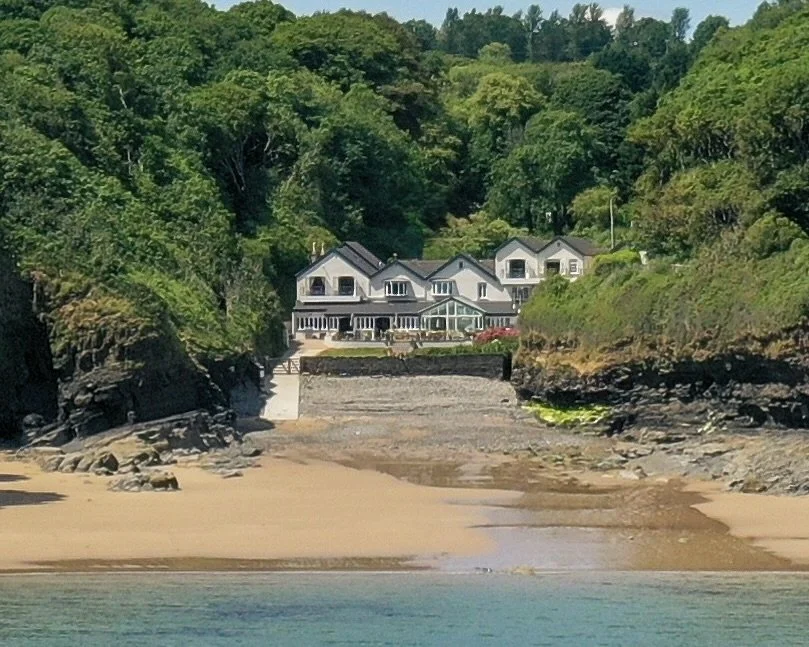
For guests staying today, that history is not something separate from the experience of the house. It is there in the view from the Sky Room, in the walk down to the bay, in the snooker table that has been part of the house for almost a century, and in the sense that Waterwynch has always been more than simply a place to stay.
Tenby Museum and Art Gallery is well worth visiting during a stay. The Norris collection and the Ridsdale mineral specimens are both there, and both connect directly to the house your group is staying in. It is a small but genuinely interesting thing to see the etchings of the bay made by the man who built it, hanging in the museum of the town he spent his life documenting. The National Library of Wales also holds his work, and their digital exhibition of the Etchings of Tenby can be viewed online.
Waterwynch House is available for exclusive hire throughout the year, sleeping up to 30 guests across 12 ensuite bedrooms.